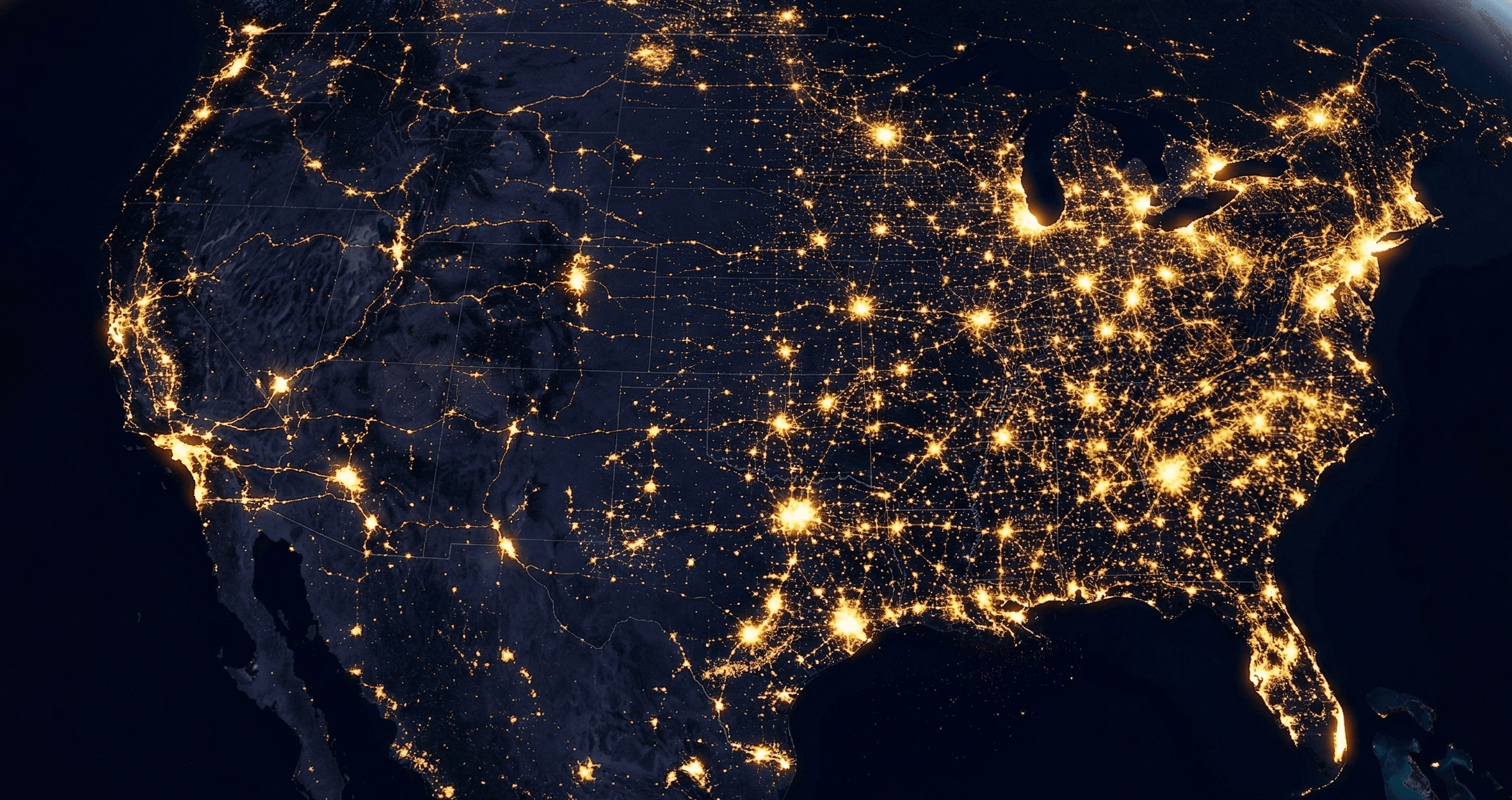
In earlier posts, I've discussed the importance of a full picture of grid operations—"context"—and the ability to instantly query that data to run workflows—"action." But I’ve left out a crucial detail: the idea that every single operation should be training data for building a smarter grid.
With AI systems, you feed in training data reflecting real-world outcomes, and the system improves at predicting future events. The same principle applies to managing the grid, but utilities have never had a system that could connect, run, and learn.
This isn't for lack of data or action. Utilities have more data than they can process, and operators make hundreds of decisions daily. The problem is that the feedback loop - the connection between what grid operators know and what they are able to do—doesn’t exist.
The problem: What happens when grid operations start over every time
Imagine a substation running hot. The utility knows it has EVs and batteries enrolled in demand response programs. This capacity could defer a costly capital upgrade. The team tries to use these distributed energy resources (DERs).
The first hurdle is identifying which DERs connect to that substation. But the DER management system (DERMS) doesn't get topology updates from SCADA. GIS has the map but isn't connected to the DERMS. Meters are reassigned between substations regularly as infrastructure changes, but this isn't communicated to the DERMS. Its picture is stale.
Operators can't trust what they see. DERs that appear available might be behind a different substation. Utilities might under-dispatch, hedge their bets, or abandon the program. The capital upgrade gets approved, and the DER program gets deprioritized.
This isn't a new idea. Utilities have tried to close this loop before. The problem was always the foundation: systems that couldn't talk to each other, data that was stale by the time it arrived, and automation built on rules that broke the moment the grid changed. The loop only works if the underlying context is live and unified. That's what's different now.
Helping every operation make the system smarter
Imagine, instead, a platform that learns from every operational event. Meters reflect their actual substation assignments. The map matches reality. When a substation runs hot, operators know exactly which capacity sits behind it. No hedging, no second-guessing. Dispatch happens in seconds.
When the event concludes, performance data (who responded, who didn't, by how much) flows back into the operational model automatically. The next event starts from a refined picture. The program improves itself.

As the loop matures, the system stops waiting for explicit queries and surfaces relevant information automatically.
Operators are right to be skeptical of AI 'automation' and 'insights.' Most of it is built on stale data and brittle rules. This is different. This isn’t a dashboard built on stale data, queried by someone who already left the company. Nor is it automation built on brittle, manual rules. It’s a model operating from a live, unified context graph. It's working from everything that has happened, continuously updated by real-time work.
We're working with innovative utiliteis, OEMs and energy companies including Vermont Electric Coop (VEC), NRTC, FranklinWH, Tesla, and more to build the intelligent grid operating system.
Three Examples
Here are three use cases (among many) that this feedback loop can help improve:
Interconnection queue management. The national interconnection queue contains over 2,000 GW of projects. More than 70% won't pass. According to LBNL, the average study takes 56 months, up from 33 months in 2010. A single project can involve a dozen internal teams over three years. By the study phase, the team often starts cold. With the loop, every project that moves through the queue feeds back into the model—restudy triggers, delay patterns, withdrawals. The platform learns which project profiles historically stall and flags them at intake. This creates institutional memory that doesn't disappear when experienced engineers retire.
Grid asset intelligence. The grid uses thousands of devices: switches, breakers, protective equipment. Utilities track performance, but that data lives in disconnected spreadsheets. There is no automated flag when a device shows wear; it gets attention only after it fails. Inside the loop, every operation feeds back. When something shifts—operating more frequently, handling currents near its limit—the platform surfaces it before it becomes a problem.
Outage management. Every outage, including fault signatures, switching sequence and restoration time feeds back into this model. The platform learns which fault patterns precede cascading failures, which restoration sequences work on specific feeder topologies, and which crew configurations resolve specific fault types fastest. The pattern recognition of your best operators doesn't retire when they do.
A final note: The people running the grid are carrying more than they should. More data, more decisions, more pressure, with fewer tools that actually connect the pieces. Texture was built from the ground up for them. Our teams spent time embedded inside utilities, watching how operators actually work, where the gaps are, and what breaks first.
They are who we’re building for.