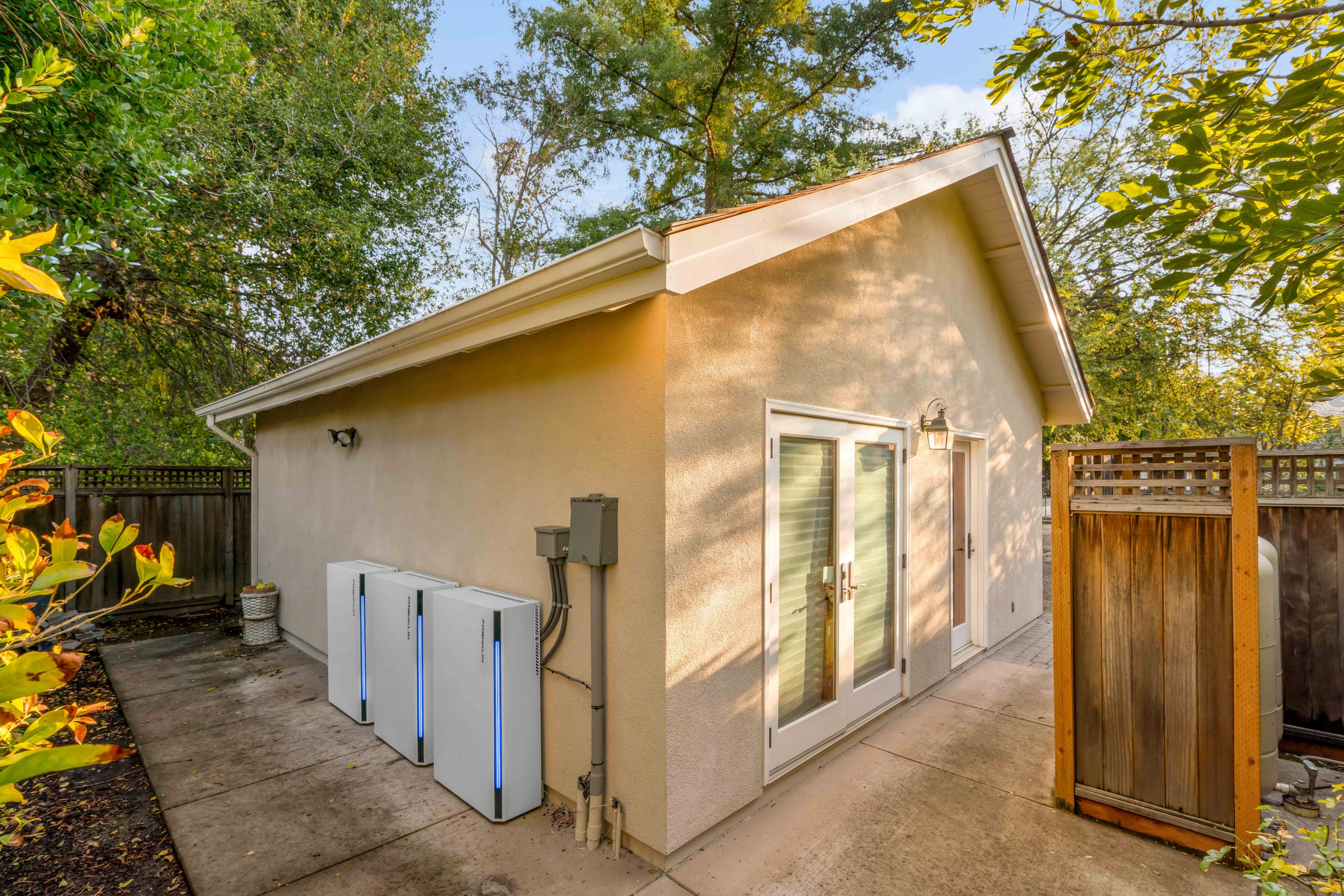
Standing up a demand response program from scratch has traditionally been an expensive, time-consuming process that gets more difficult the fewer batteries you have. Battery OEMs and DERMS providers simply aren't built to support smaller-scale needs, so co-ops with a handful of residential batteries sometimes struggle to find their way.
However, this support gap is not insurmountable. With some planning and some patience, you can absolutely run a successful demand response program with 10, 20, or 50 residential batteries. We know because we've seen it happen, both as industry professionals and software partners. Read on for our learnings about identifying potential program features, connecting and monitoring equipment, calculating incentives, facilitating customer enrollment, and tracking key program metrics.
How Vermont Electric Cooperative built a bring your own battery program with 12+ OEMs that saved over $400,000 for members. --> Read the case study
What do you and your members need from a demand response program?
The typical goal for a demand response program is to reduce peak grid load. By harnessing the power stored in residential batteries, you can shave load and lower marginal energy cost during periods of high demand. But that broad mission statement needs more nuance when applied to smaller setups. Geographical, technological, and behavioral considerations might dictate how you design and run different aspects of your program.
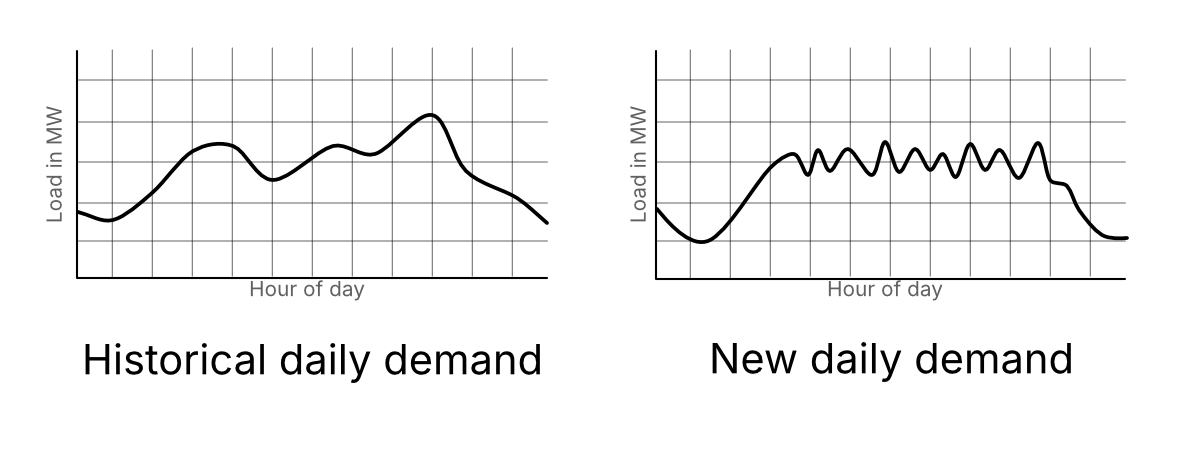
A real-world example: extreme weather patterns
For example, a co-op dealing with extreme weather patterns might find their members value resilience more than energy bill savings. Perhaps keeping the heat on during a Michigan snowstorm is where members see the most value from a battery. In this scenario, two important components of the demand response program would be to ensure batteries are placed predominantly in high-risk areas, and that a substantial amount of battery capacity is kept in reserve.
Other potential priorities to consider
Realistically, your needs may not be that cut and dry. But knowing about any discrete priorities early on can influence decisions you make further down the road, so it's worth having the conversations up front. Consider the following questions in the pre-planning phase:
- Does utility battery ownership make sense for your program, or is bring-your-own battery a better fit for your members?
- Are there any regulatory mandates governing program setup or battery behavior?
- Is it important to facilitate batteries discharging to the grid?
- Where will members find value in adopting residential batteries?
- How willing are members to hand over control of their batteries' charge and discharge cycles?
- Is grid risk more concentrated in one geographic area or calendar season?
- Are there any particularities about how batteries charge or discharge in those areas or seasons (such as limited solar availability for recharge during winter)?
- Do any communities have higher barriers to access for battery technology?
Considerations for connecting and controlling residential batteries
The most purely technical step in setting up a demand response program is installing and connecting the batteries.
Most co-ops find it best to work with local installers to set up the foundational one-way connection. Local installation experts usually have experience with many of the major battery providers, like Tesla and FranklinWH, and can complete efficient installations at much lower cost than developing an in-house installation team. Some co-ops have found it helpful to provide program-specific training for qualified installers in the program's service area.
If you need batteries to be able to discharge back to the grid (rather than just provide power to the residence in which they're installed), the hardware enablement process can involve further considerations.
Additional needs for two-way connections
Two-way connection enables new program opportunities (like load shifting over a larger geographic area). However, the operational and technical expense may not be worth it for smaller programs or if you have limited control over transmission equipment. If you do want to introduce two-way connection, here are some key operational features:
- Telemetry data intake to facilitate continuous monitoring of device status, power output, and energy consumption.
- Reporting and monitoring dashboards that track substation, feeder, and transformer performance and alert your team to anomalies.
- Real-time control for individual devices and/or groups of devices.
- Rule-based or algorithmic control using time, price signals, or other triggers.
FranklinWH & Texture begin solar-and-storage installs with Ann Arbor Sustainable Energy Utility with goal of installing solar-plus-storage on about 150 homes in 2026 and up to 1,000 homes in 2027 --> Read the case study
Establishing an efficient incentive structure
Collective goals like reducing greenhouse gas emissions or supporting grid health may motivate member interest in residential batteries, but moral motivation doesn't pay the bills.
As members across the country become more familiar with the concept of a demand response program, they increasingly expect financial incentives to bring down the cost of equipment purchase or installation. Fortunately, some amount of financial support is often economically viable from the co-op's perspective, since demand response programs should result in savings for the co-op.
When calculating the most efficient incentive structure, consider the different types of incentives you can offer:
| Type of incentive | Frequency and unit | Form | Purpose |
|---|---|---|---|
| Installation incentive | One-time, per battery | Installer rebate, bill credit, or direct payment | Cover some of the cost of equipment purchase and installation |
| Registration incentive | One-time, per member | Bill credit or direct payment | Incentivize connecting the battery to the program |
| Performance incentive | Recurring, per kWh dispatched | Bill credit | Incentivize participation in specific events |
| Referral bonus | One-time, per referred member | Bill credit or direct payment | Incentivize more members to join the program |
| Non-participating member revenue share | Recurring, per member | Bill credit | Provide value to non-participating members |
Note as well that time-of-use pricing can create an additional incentive for participants, as shifting power consumption to off-peak hours lowers the participant's per-unit cost.
Whichever types of incentives make sense for your program, the next order of business is calculating the amount to offer. If you're looking to keep your program small for the time being, you may not need to do complex calculations. The priority is ensuring the co-op can cover the cost of incentives.
If you want to instead set up a foundation for a broader program in the future, or if you have a mandate to prove the program's value, consider looking into the numbers more closely. The goal here is to calculate the net present value of each battery and the projected cost of the program, and (if desired) set a revenue split between participating and non-participating members. With these numbers in hand, you can set a realistic, economically efficient incentive.
We've found a few metrics to be potentially valuable when figuring out net present value and projected costs, or when deciding if the co-op can afford to invest in utility-owned residential batteries:
- Upfront fixed costs
- Ongoing fixed costs of equipment
- Energy generation and discharge capacity metrics
- Program success metrics (projected averages)
- Cost metrics
- Ongoing program costs (excluding financing costs)
- Financing costs
Higher incentives encourage low-income residents to try residential batteries
Members in historically disadvantaged areas or low-income households are more vulnerable when power outages strike, and yet have the least opportunity to install and maintain residential batteries if financial incentives aren't provided. Programs may want to offer higher incentives for members in those areas, or educate members about federal programs which may be able to add tax credits or further rebates.
Lower incentives can increase adhesion among members
Ramping down incentives can be a powerful tool when you face partial participation from your members.
If you allow some number of opt-out instances per month or year, you could try to increase adhesion by implementing a reduced incentive rate for opting out. For example, a $10/month participation incentive could be reduced to $5/month if the member opts out when one event is called, and forfeited entirely for the month if the member opts out of more than one event.
The art and science of customer enrollment
A strong customer enrollment strategy encompasses marketing, contract construction, and post-enrollment support.
You know your members best, and it's likely you already have a marketing strategy in mind. The only specific advice we'll give is to keep a running list of members that ask about battery programs in other conversations, and use this list as your basis for targeted outreach.
When you build out contracts for your demand response program, make sure you define the quantitative aspects of a member's participation:
- How many events per month, season, or year are covered?
- How much battery capacity will each event use?
- Will any battery capacity be specifically left in reserve?
- Will participants be notified before each event?
- How are incentives structured?
- Will incentives change throughout the contract term, or are they locked in?
- What happens if the member moves, or leaves the program for another reason?
- Who retains ownership of the battery, and who is responsible for maintenance?
Post-enrollment support helps maintain member engagement and reduce non-participation or opt-outs. Proactive communication about incentive changes, predicted events, and program functionality are critical for keeping your members engaged. You could also consider extra resources like webinars, meetups, and informational newsletters where appropriate. Remember that as your program grows, members who feel like they have a stake in the program are more likely to refer new participants.
Keeping it rolling
Your demand response program might have a great foundation, but its long-term success will require close management. Most programs run on a multi-year timeframe, and even small changes can make a difference in overall success.
Keep an eye out for regulatory and behavioral shifts like:
- Changes in guidelines for outside incentive programs — Members entering your BYOB program later on may take advantage of outside support to further reduce purchase and installation costs, or to finance additional infrastructure like solar panels. Changes to programs like the IRS Residential Clean Energy Credit can influence member participation in your demand response program.
- Changes in battery software capabilities — Unexpected changes in software capabilities can cause members to unknowingly limit their participation in your program. One impactful instance we saw recently at a co-op was the introduction of Tesla's Backup Reserve setting, which gave members using Tesla Powerwalls the option to set a reserve percentage on their batteries.
- Changes in member participation adhesion — The typical demand response program has a member enrollment term of 5–10 years. Monitoring overall trends in participation can help avoid unexpected churn.
- Changes in overall market behavior — As time goes on, you may be less likely to accurately call an event if other utility providers in the region are also trying to shave easy-to-predict peaks. It's worth keeping in communication with providers around you, and keeping an eye on changes in regionwide behavior.
If you're allowing batteries to discharge back into the grid and you have control over transmission equipment, consider also watching for unexpected equipment maintenance needs.
Many friends make light work
If the process of setting up a demand response program seems daunting, know that you're not alone. Co-ops before you have spun up demand response programs with only a few batteries, and co-ops after you will, too.
Texture is building the operating system for the energy grid, but we're also building connections. Join the conversation in our Cooperative Operations Research and Development (CORD) group, which meets online for low-stress, high-impact conversations that make a real difference.
