What distributed flexibility earns in the Southeast.
There is no RTO and no Order 2222 pathway. Cooperatives serve close to a quarter of customers, and 67 of 157 distribution cooperatives run at least one DER program.
August 2026 · Texture · Practitioner reference for cooperatives and municipal utilities
43%
Southeast distribution cooperatives with at least one DER program (67 of 157)
23.7%
Cooperative share of residential and commercial accounts
1.01%
Residential customers on any time-based rate, versus 11.5 percent nationally
About this report
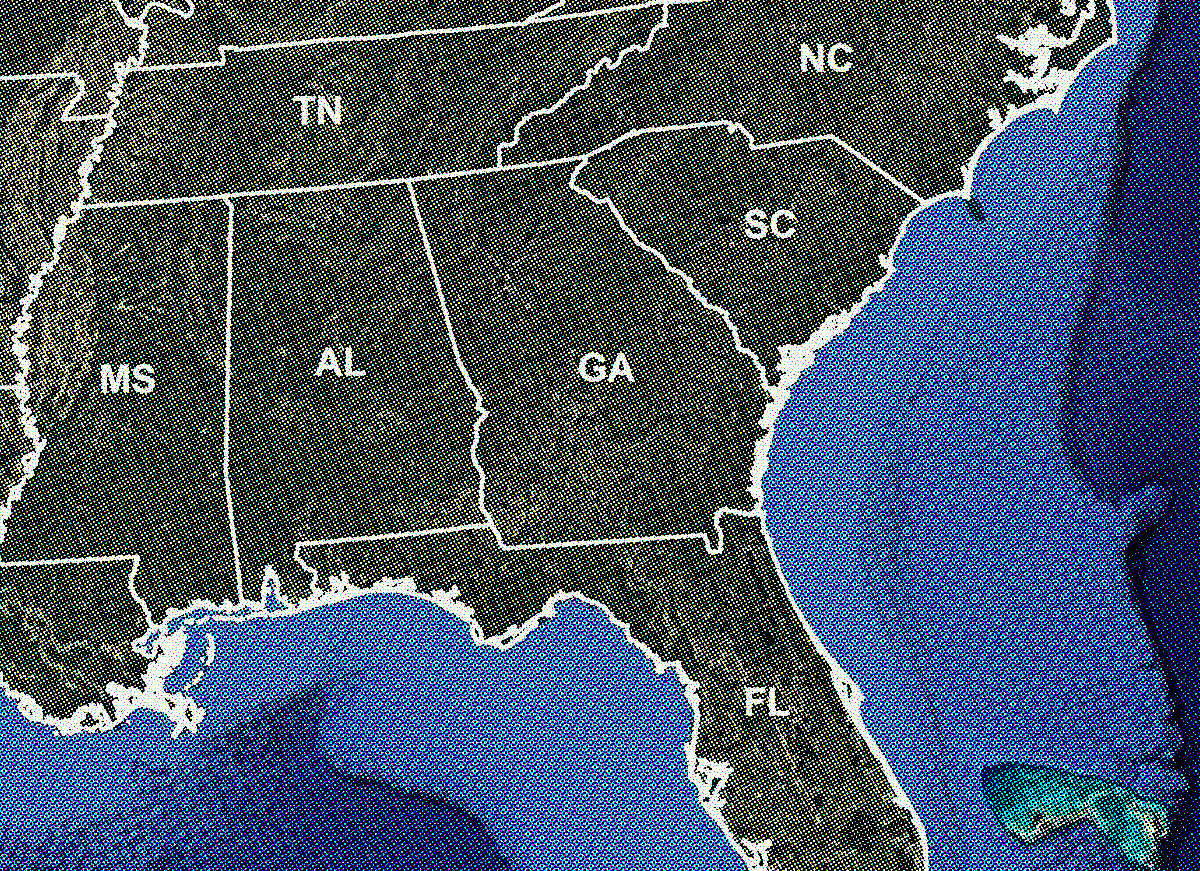
The non-market Southeast covers Alabama, Florida, Georgia, Kentucky, Mississippi, North Carolina, South Carolina, Tennessee, and a sliver of Virginia. Investor-owned utilities serve 58.3 percent of residential and commercial accounts, cooperatives 23.7 percent, and public power 17.8 percent. Reported programs hold 2.52 million enrolled customers and 11,428 MW of potential peak demand savings. No distribution cooperative in the footprint self-generates as much as 10 percent of its energy; each buys from a G&T or TVA, so the wholesale demand charge is the clearest DER value in the region.
Key findings
Why is the wholesale demand charge the clearest DER value for Southeast co-ops?
Vertical integration covers only part of the region. The 13 investor-owned utilities own generation, transmission, and wires, so a DER's value to them is an avoided cost inside one balance sheet. No distribution cooperative self-generates as much as 10 percent of its energy, and only 4 of 146 report any net generation at all. Each buys from a G&T or TVA under contract, so the same kilowatt reduces a bill that one legal entity pays another. That split is why the wholesale demand charge is the clearest DER value in the region.
Why is retail bill optimization so thin in the Southeast?
1.01 percent of the region's residential customers were on any time-based rate in 2024, against 11.5 percent nationally. No utility in the footprint runs a default residential time-of-use rate. Retail bill optimization, the largest stream in California, is the thinnest one here. Winter sets the peak across most of the footprint: Duke Energy's Carolinas system reached a record winter peak in January 2026, and cold-morning peaks between 6 and 10 a.m. govern resource planning at TVA and the Carolinas utilities.
Get the DER Value by Region: Southeast Report.
Frequently asked questions
Does Order 2222 apply in the Southeast?
No. The Southeast clears no day-ahead energy market, no ancillary services market, and no capacity auction. FERC Order 2222 obliges RTOs and ISOs to open their markets to DER aggregations, and the region has neither. The Southeast Energy Exchange Market matches bilateral trades every fifteen minutes; it clears about 80,000 MWh a month, roughly 1 to 2 percent of bilateral trade, and its participants are utilities rather than resources.
How many Southeast cooperatives run a DER program?
67 of 157 distribution cooperatives in the footprint, 43 percent, run at least one DER program. Cooperatives serve 23.7 percent of residential and commercial accounts, far above their share in most regions. Investor-owned coverage is higher by count: 11 of 13 report a demand-response program.
Does the Southeast have the meters to settle DER programs?
94.4 percent of residential customers in the footprint have an AMI meter, against 89.3 percent nationally. Cooperatives are at 89 percent. The meter that matters most for a cooperative is still the delivery-point meter: the wholesale demand charge in its contract with TVA or its G&T is calculated from it, and that charge is the only one in the region based on demand rather than on energy.