Every DER value stream in MISO.
About 37 percent of MISO cooperatives, roughly 120 of 328, run at least one DER program. Around 90 percent of load-serving entities self-supply capacity rather than clear it through the auction.
August 2026 · Texture · Practitioner reference for cooperatives and municipal utilities
37%
MISO cooperatives with at least one DER program (120 of 328)
90%
Load-serving entities that self-supply capacity before the auction
$666.50
Summer 2025 Planning Resource Auction price per MW-day, MISO's highest
About this report
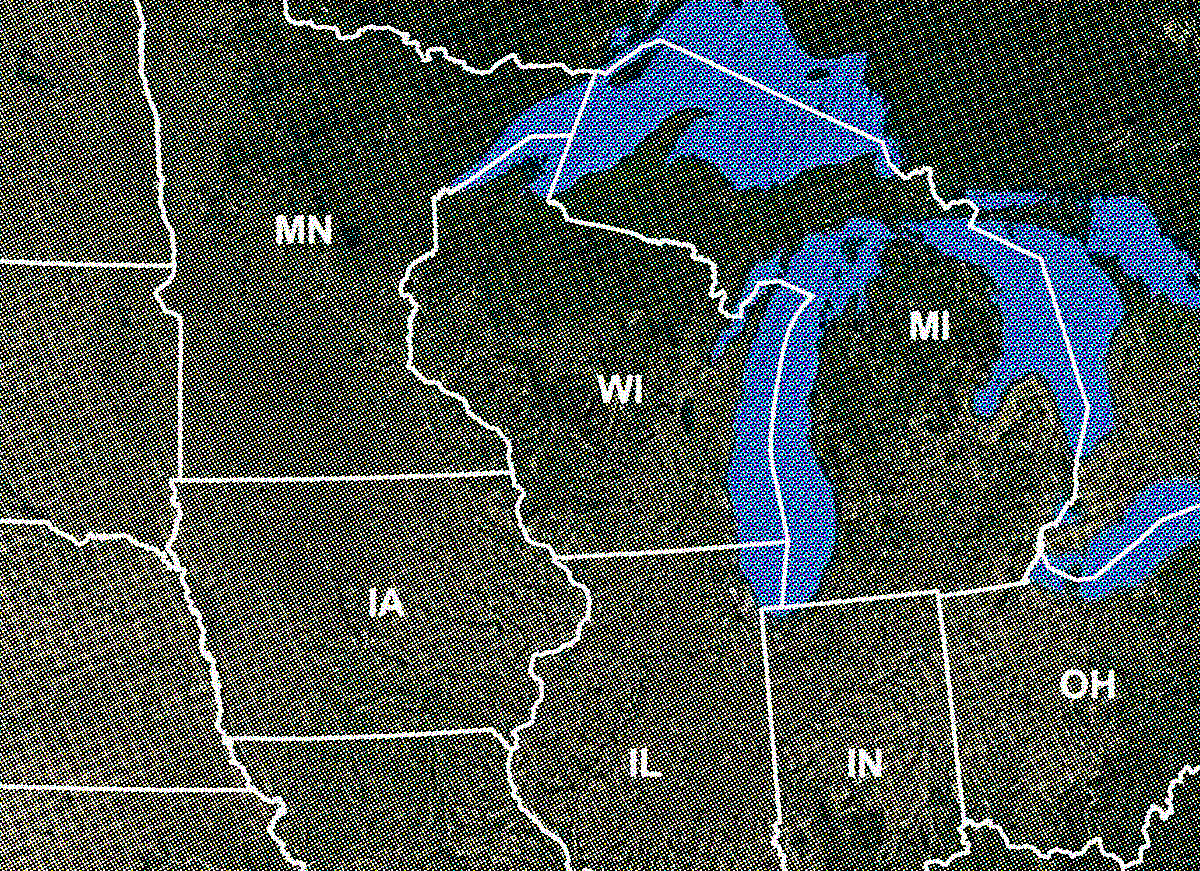
MISO spans parts of 15 states from Manitoba to the Gulf and serves about 45 million people, with around 123 GW of summer peak demand against roughly 138 GW of available generation in 2025. The footprint has 328 cooperatives, 165 municipal systems, and 48 investor-owned utilities. Most cooperatives buy wholesale power through a G&T that is the MISO market participant on their behalf.
Key findings
Why do most MISO cooperatives never touch the capacity auction?
MISO's seasonal Planning Resource Auction is a residual market: roughly 90 percent of load-serving entities self-supply or arrange capacity before the auction, so most cooperatives never touch the clearing price directly. Prices are volatile. Summer 2025 cleared at $666.50 per MW-day across every zone, the highest in MISO history, then summer 2026/27 eased to $424.30 in the North/Central region. That swing is felt through a power supplier's portfolio, not a live exchange the way it is in PJM.
Where do MISO cooperatives capture transmission value?
Most MISO members take Network Integration Transmission Service, which allocates regional transmission cost in proportion to a load's contribution to the monthly coincident peak. Shaving load in the single interval that sets that peak lowers the transmission demand charge for the whole month. CAISO has no equivalent charge, so this is one of the clearest sources of value in MISO, and one many cooperatives already capture without calling it a market product.
Get the DER Value in MISO Report.
Frequently asked questions
When can third-party DER aggregators participate in MISO?
FERC accepted a MISO Order 2222 timeline that pushes full participation to 2030, later than most other regions. Third-party aggregators of retail customers can reach the market today only in Illinois and Michigan. Everywhere else the utility or its G&T is the aggregator.
How many MISO cooperatives run a DER program?
About 37 percent of the region's cooperatives, roughly 120 of 328, run at least one DER program, from EV and water-heater load control to battery and rate programs. Investor-owned utilities run programs at 54 percent (26 of 48) and municipal systems at 10 percent (16 of 165).
What is NITS coincident-peak billing in MISO?
Network Integration Transmission Service allocates regional transmission cost based on a load's contribution to the monthly coincident peak. Three of the largest MISO streams settle at the delivery-point meter: that coincident-peak charge, the seasonal capacity obligation, and the G&T demand charge. A distribution cooperative already owns that meter, so those three need no member enrollment and no AMI.