When Nick, Victor, and I started Texture, we set out to build a data platform for energy companies dealing with a grid that was changing fast. The deeper we went, the bigger the challenges got. So we built what the industry actually needed: an operating system. Texture now works with dozens of electric utilities, OEMs, and grid services companies building software, managing capacity, monitoring grid hardware and more. All from one place.
Today, we're announcing another $12.5M in funding, led by VoLo Earth and Equal Ventures, with Lerer Hippeau and Abstract Ventures doubling down.
The Grid’s Fragmented Stack
Believe it or not, energy was an early adopter of enterprise software. Utilities built out SCADA systems, customer information systems, outage management tools, GIS platforms, layer by layer, over decades. A new system for a new problem, every time. The stack kept growing.
Today, a utility might run a dozen or more systems, each holding a piece of the operational picture, none of them built to share it. The people who know how to stitch the pieces together, which system to trust for which data, which report needs manual adjustment, which workflow happens outside any tool entirely, are some of the most experienced operators in any industry. The grid is moving too fast for that, and a significant number of them are heading toward retirement.
They're handing off a grid that is harder to run than the one they inherited. Solar, batteries, and EVs are connecting faster than anyone planned. Data centers are arriving in communities and doubling load overnight. Customer expectations around reliability and affordability have never been higher. And now the industry is wrestling seriously with how AI fits into real workflows on critical infrastructure.
The Operating System for the Energy Grid
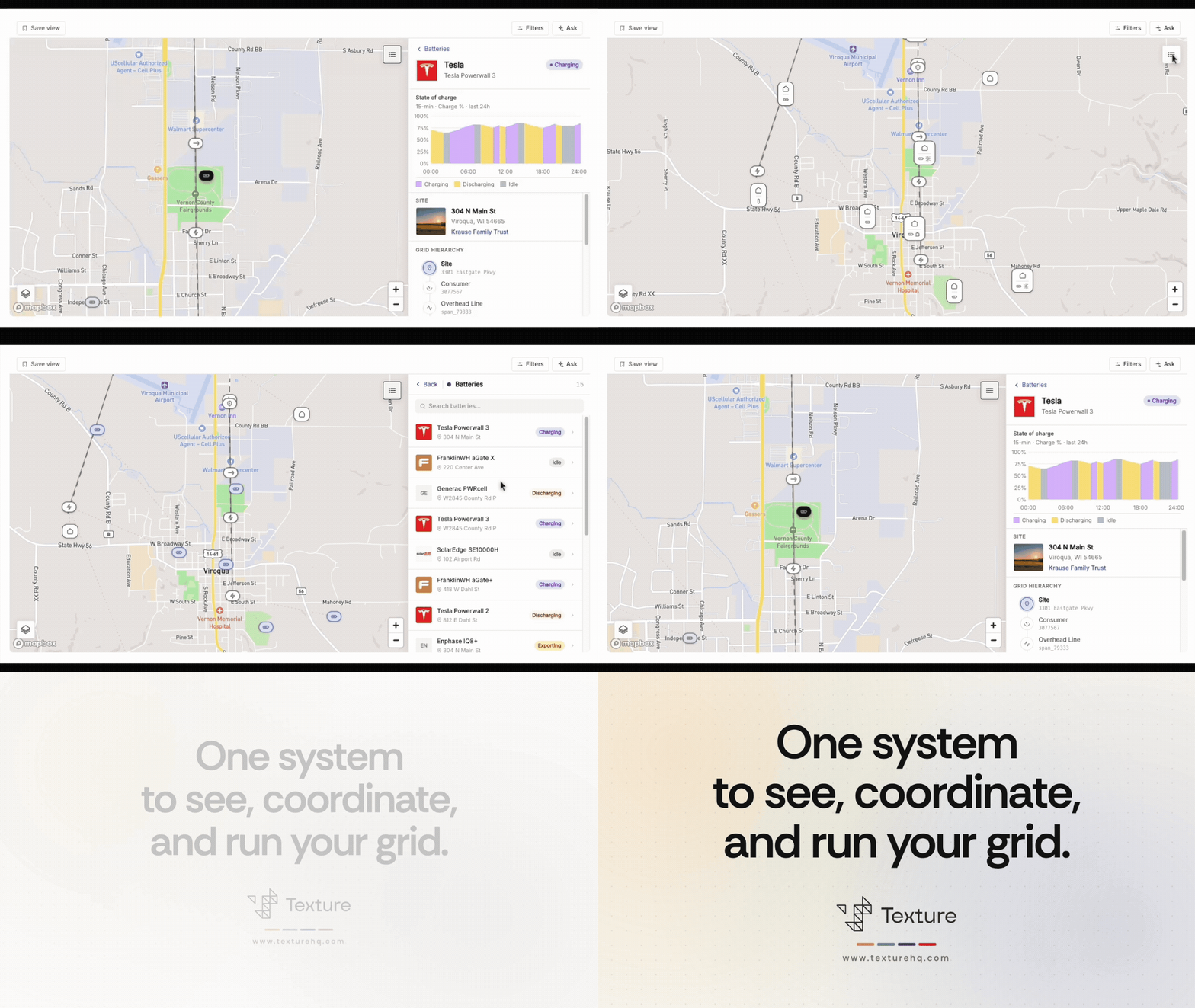
Texture is built around two core functions: grid visibility and grid operations.
Visibility is a complete, contextual understanding of everything happening across your assets and customers. When all of your systems are contributing into one operating model, you can monitor transformer health, detect outages, trigger maintenance, identify new devices connecting behind the meter, and catch developing faults before they become failures. You stop chasing information across systems and start actually seeing your grid. At Vermont Electric Cooperative, for instance, they were challenged by having data spread out across many systems, which slowed down decision-making. Texture modeled all their data into one place so that they’re not wasting hours chasing information, but working from live context about what’s going on in their own grid.
Operating workflows are where that visibility pays off. With a coherent picture of the grid underneath it, Texture lets operators shift load, dispatch assets, trigger automated notifications, communicate with customers, and manage the full lifecycle of flexibility programs from enrollment through settlement. The workflows that today require jumping between systems, spreadsheets, and vendor portalsm now run in one place. And as the industry evolves, those same workflows help us bring agents to the grid.
For OEMs like sonnen, which operates a virtual power plant across thousands of residential batteries, Texture has unlocked fleet-level visibility and analytics to run VPP operations without them having to build the data infrastructure to support it.
Better visibility means fewer unexpected faults, fewer outages, and fewer emergency transformer replacements. Better operations means more effective demand response, more reliable program performance, and less strain on transmission infrastructure. In an industry under real capital and performance pressure, every bit of margin matters.
A New Era
The energy industry has been running on FTP file transfers, siloed databases, multiple vendor dashboards that don't talk to each other, and implementation timelines measured in years. That model worked when the grid was linear and the pace of change was slower. It doesn't anymore.
The cost of fragmentation used to be friction. Now it's showing up in reliability, in affordability, in the ability to move fast enough to meet what's coming.
The energy companies who get it tend to get it fast. They're the ones building with us.
If this is a problem you want to work on, come find us. We're hiring across engineering, product, and customer success.
— Sanjiv Sanghavi Co-founder & CEO, Texture