What distributed flexibility earns in New England.
More than 8,000 MW of behind-the-meter solar already cuts ISO-NE summer peak-hour demand by more than 1,700 MW. Regional Network Service, billed on twelve monthly peaks, is the largest lever in the stack.
August 2026 · Texture · Practitioner reference for cooperatives and municipal utilities
8,000+
MW of behind-the-meter solar, cutting summer peak by more than 1,700 MW
$184
RNS rate per kW-year effective January 1, 2026; forecast $220 by 2030
26%
New England residential customers with AMI, versus 84 percent nationally
About this report
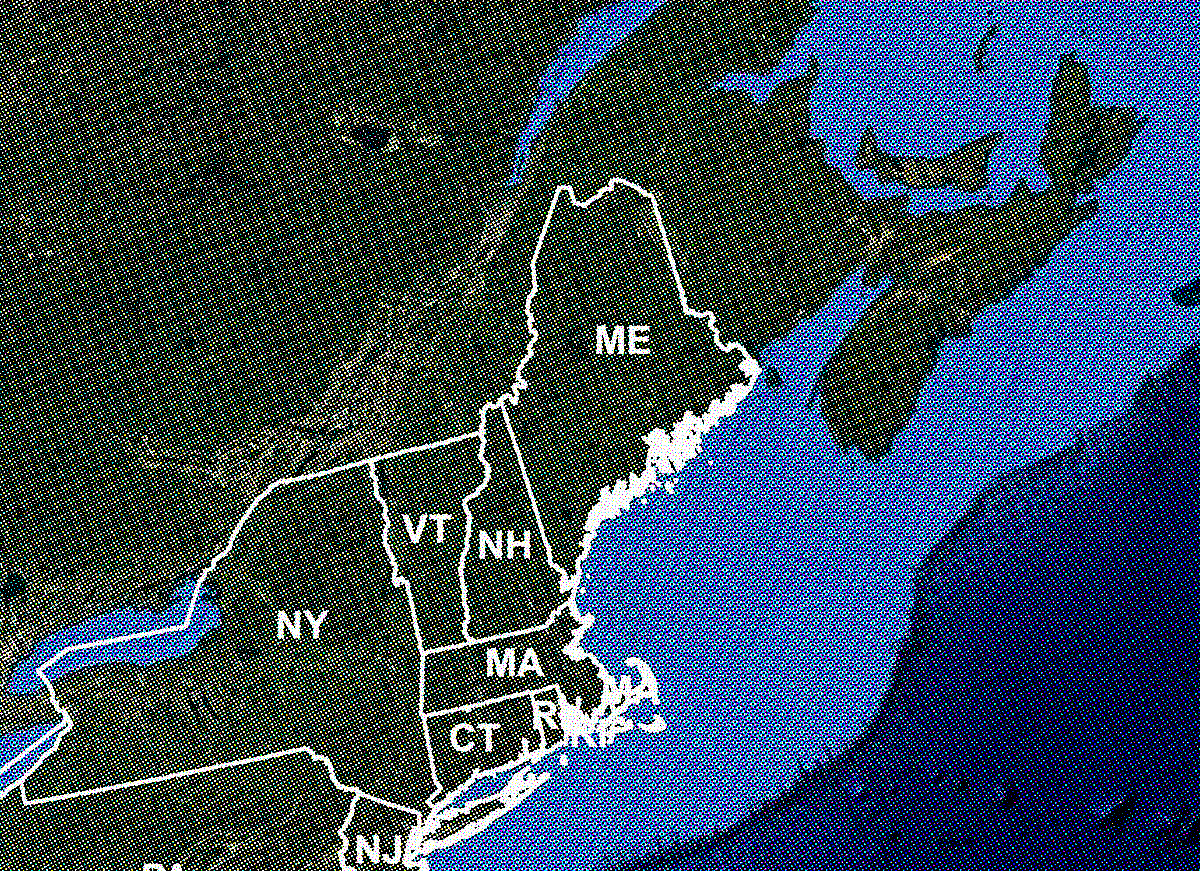
ISO New England covers Connecticut, Maine, Massachusetts, New Hampshire, Rhode Island, and Vermont. The summer 2026 peak forecast is 25,228 MW under normal weather. Investor-owned utilities serve 90.3 percent of distribution customers, municipals 7.8 percent, and the four cooperatives 1.9 percent. About 26 percent of New England residential customers have an advanced meter, against 84 percent nationally, the lowest AMI deployment in the country.
Key findings
Why is transmission peak shaving the largest DER lever in New England?
Regional Network Service recovers pooled transmission cost on each customer's load during the peak hour of each month, twelve readings a year. The Forward Capacity Market obligation is billed on load during the single highest hour of the prior calendar year. The RNS rate effective January 1, 2026 is about $184 per kW-year. Vermont Electric Cooperative publishes the practitioner version: one kW off the monthly peak saves $12.50 in transmission charges for that month, and one kW off the annual ISO-NE peak saves about $3.80 a month for the following year.
When can DERs enter ISO-NE energy and ancillary markets?
ISO-NE's Order 2222 compliance date for energy and ancillary services is November 1, 2026, making New England the second organized market to open its energy markets to DER aggregations. Forward Capacity Auction 18, held February 5, 2024, was the last three-year-forward auction. FERC accepted Capacity Auction Reforms on March 30, 2026; the first prompt auction under the new framework runs in 2028. A resource built between now and then has no capacity auction to enter.
Get the DER Value by Region: ISONE Report.
Frequently asked questions
How do cooperative rate rules differ across New England?
The Vermont Public Utility Commission regulates Vermont Electric Cooperative and Washington Electric Cooperative. The Maine PUC regulates Fox Islands Electric Cooperative. New Hampshire Electric Cooperative filed a certificate of deregulation in 2000 after a 60 percent member vote, and its board has set rates without commission review ever since. A cooperative that wants to launch a flexible-load tariff faces a rate case in Vermont and Maine and a board vote in New Hampshire.
How much behind-the-meter solar is on the ISO-NE system?
More than 8,000 MW of behind-the-meter solar cuts summer peak-hour demand by more than 1,700 MW. About 2,600 MW of demand capacity resources are registered, counting active, energy-efficiency, and other passive resources.
What are the two coincident-peak charges in ISO-NE?
RNS is billed on the peak hour of each month. The capacity tag is billed on the single highest system hour of the prior calendar year. The transmission charge is roughly four times the capacity charge and offers twelve chances a year instead of one. Capacity for 2027/2028 cleared at $3.58 per kW-month.